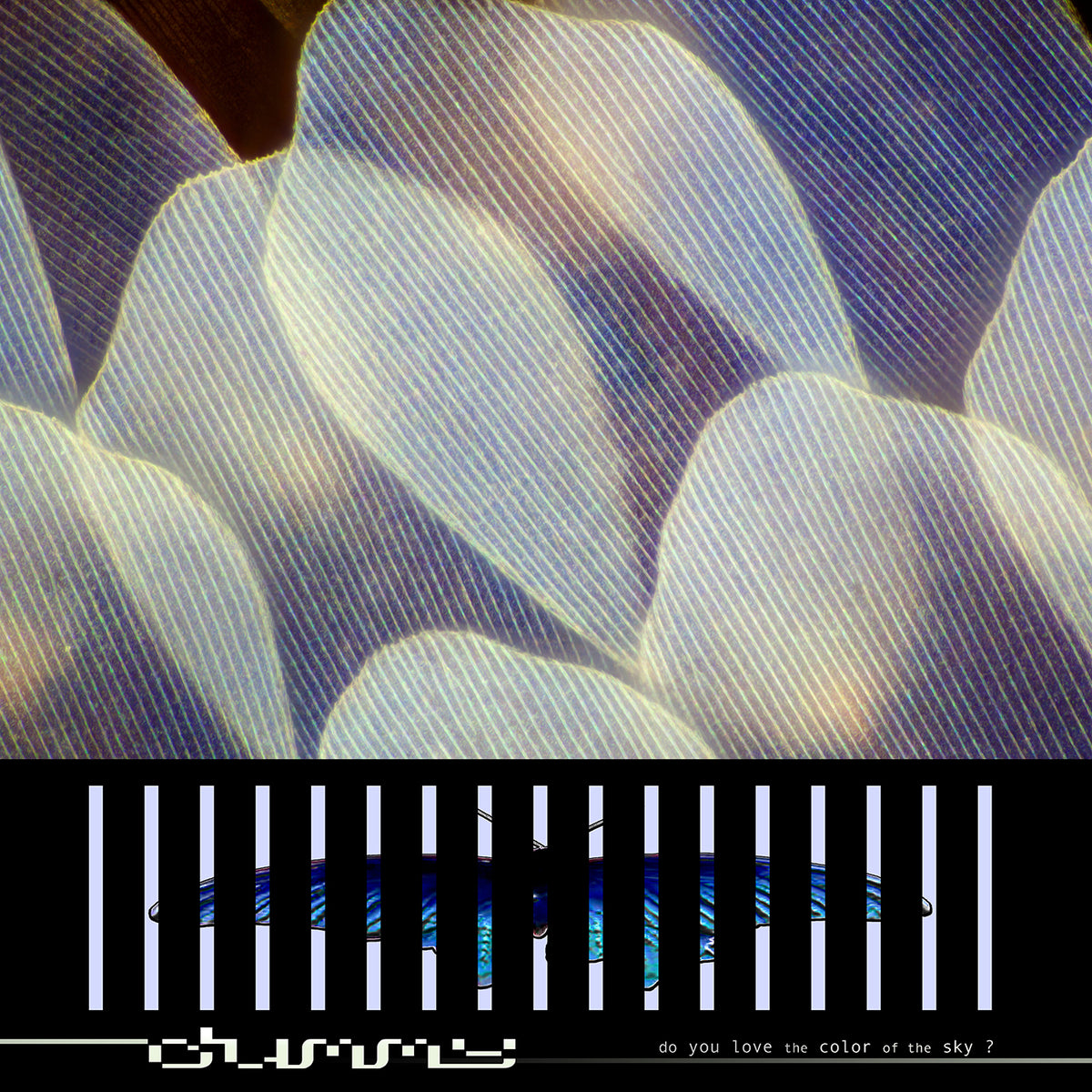
It’s been seven years since Detroit singer and songwriter Stef Chura released her last album, Midnight. Plenty of dramatic and life-altering things happened in those seven years: She broke off an engagement, she left Detroit for New Orleans (and then Louisville), she gave birth to her first child, she ultimately returned to Detroit. But those events are not the true story of Dancing Alone on the Concrete, her third album and second for Saddle Creek. The true story of this album—the experience that gives it its thematic and aesthetic shape—is more simple than that. Here’s what happened while Stef Chura was writing the songs that would eventually become Dancing Alone on the Concrete: She practiced the piano and the guitar a whole lot, and she went on dates.
Single for the first time in years, Chura used the 2020 Covid lockdowns as an excuse to start over in New Orleans, where, like everyone else, she was mostly stuck indoors, unable to tour or play locally. “I was just writing and practicing,” she says. “By playing the piano more, I was learning more about transposing chords and things like that. I was going back and forth, playing songs on the guitar and the piano, and it lent itself to the writing process in a nice way.” Chura’s singing voice has always been unique—it’s brassy but contained, like a muted trumpet, and on Dancing Alone on the Concrete she plays around with little hitches and lilts, punching her melody upward in “Leadweight” as she sings about someone weighing her down. That song moves along on a “Sweet Jane” shimmy, its punchiness lightly inspired by Wreckless Eric’s “Whole Wide World.”
Though it may seem like an obvious outcome considering the context, the album evinces a mastery of craft that only comes with constant writing, experimenting, and editing; the songs here unfold with the simple inevitability that powers all great songs. “Babydoll” bounces along on a bold power-pop beat that brings to mind the early New Pornographers, its lyrics simultaneously a pep talk, a punch-up, and a reflection on how hard it can be to claim one’s own space in a brutal world. If it also sounds a bit like Neutral Milk Hotel in anthem mode, that’s no accident: NMH’s Scott Spillane and The Olivia Tremor Control’s John Fernandes both appear on the track, and the album was produced by Robert Schneider of Apples in Stereo, who recorded much of the Elephant 6 output. “When I met Robert, I sent him some demos, and ‘Babydoll’ was the main one that [prompted us to ask if] we’re going to do this together, because he doesn’t produce records anymore,” Chura says.
At Athens’ Chase Park Transduction studio, Chura teamed up with producers, engineers, and session musicians David Barbe (Sugar) and Andy LeMaster (Now It's Overhead) who played nearly as big a role in shaping the album as Schneider. Chura was also joined by her longtime drummer Ryan Clancy. They enlisted R.E.M.’s Peter Buck and Mike Mills, who play together on “Danny,” which sounds a bit like John McEntire producing an Americana record. “Robert was like ‘Wouldn’t this sound great with Mike Mills playing bass on it? So David Barbe called him up, and Mike Mills and Peter Buck ended up playing on that song just from shooting the shit.” Squint and you might hear a bit of Michael Stipe’s bittersweet sensibility in the melody, too, but the song itself finds Chura at her least conflicted. It is a moment of pure longing: “Please don’t make me chase you all the way to New York City,” Chura sings to a person whose kindness seemed to offer her a way forward in a confusing time.
About that time. Once lockdown was lifted, Chura “maybe dabbled debauchery of some kind,” as she puts it. “The word ‘rumspringa’ comes to mind.” Much of Dancing Alone on the Concrete concerns the ways in which our need for love convinces us to betray ourselves just to keep the other person around. “I tried to change my thoughts for you, I tried to rearrange who I was for you,” she sings in “The Concrete,” “But you found out.” It’s an unusual framing—the issue isn’t the narrator’s selling herself out, it’s her getting caught doing so—which implies a certain level of personal resilience; try as you might, you can’t become anyone else for too long. “There’s a sadness to that song,” Chura says. “You write a song and then you sing it a bunch and you can lose the connection you had to it. But I remember when we were recording it, I teared up, I’d forgotten that it was a sad song.”
On first listen, you might forget, too; as you listen to Dancing Alone on the Concrete, you may keep forgetting how sad these songs can be, such is the sunniness of Chura’s sense of melody and the charisma with which she delivers them. When they turn toward darkness, they do so cleverly and with grace. “I know we’re connected, cause I’m going where you’re going,” she sings in “Leadweight.” On first blush, it sounds like nothing more than a confession of love and devotion. The line before it? “He drops me to the bottom of the ocean.” At least she’s bringing him with her.
“When I was in New Orleans, the freedom to date was exciting,” Chura says. “But there’s this search for love in the album, and no real arrival at any point in time.” Though that search is largely folded into plucky songs about fuckboys (“Thunder and Lightning”) and doe-eyed suitors (“Be My Hound”), in the tender “Lovesick,” the unspoken becomes the spoken. “I wanna be in love,” Chura sings, her voice suffused with a deep longing that makes her sound a bit like Natalie Merchant. “I want to forget slowly / And then all at once / That I’d ever known anything else.” Musically and thematically, it’s the album’s most straightforward moment, nothing but Chura’s voice, her piano, LeMaster’s drone guitar, and a desire so deeply expressed it feels bodily.
Stef Chura’s been through a lot in the last seven years. Maybe you’ve been through similar things. If you haven’t, it’s likely you will soon; everyday difficulty is the primary source here. But Dancing Alone on the Concrete’s key is right there, the adverb in the album’s title: alone. Not loneliness, but personal comfort, self-affirmation, healthy solitude. Not that you’ll find such therapy-speak on this record; it’s too embodied, too rich with experience. It’s clear that these songs come from a place of pain or confusion, that their genesis is in various forms of suffering—you can feel it. As Chura says, they’re about the search for love. And while they never quite arrive there, the rightful object of her affection is right there in every song, in the form of the person singing them.